ADVERTISEMENT
Why Are Some Window Bars Curved at the Bottom?
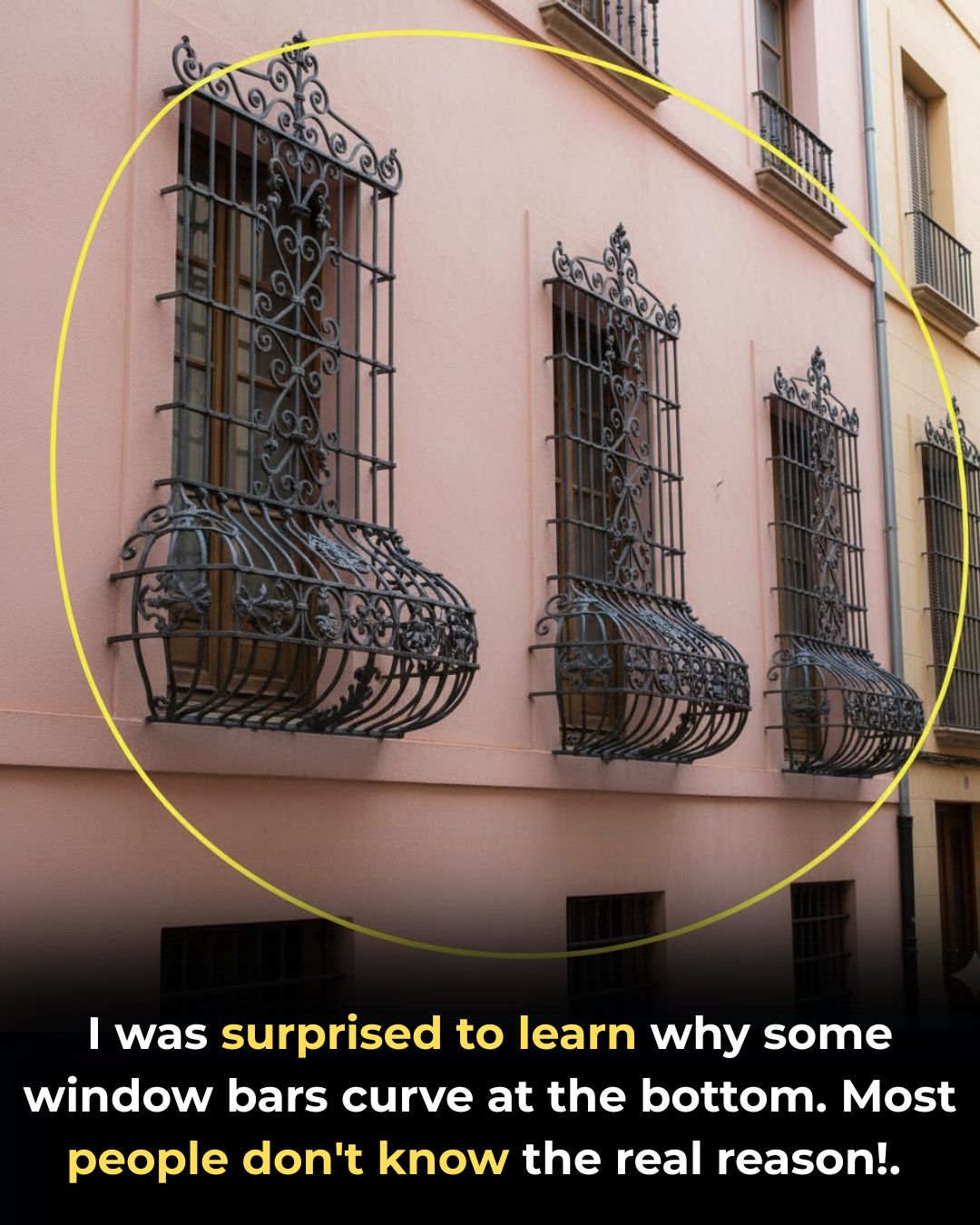
If you’ve ever walked through an older neighborhood, traveled in parts of Europe or Latin America, or lived in a city where window bars are common, you may have noticed something curious: some window bars don’t run straight up and down. Instead, they bulge outward at the bottom in a smooth curve, like a small metal belly attached to the window.
As it turns out, those curved window bars—often called potbelly bars, Juliet bars, or flower box bars—exist for a surprisingly practical mix of reasons. Their story touches on history, safety, architecture, climate, and even human psychology.
Let’s break it down.
A Quick Description: What Are Curved Window Bars?
Curved window bars are metal security grilles installed over windows, where the lower portion bows outward while the top remains closer to the building. The curve usually creates a small semi-cage extending beyond the window frame.
They’re most commonly seen on:
Ground-floor or basement windows
Older buildings
Homes in high-density urban areas
While styles vary, the outward curve is intentional—and functional.
Reason #1: Space for Flower Boxes and Plants 🌿
One of the oldest and most charming reasons is also the simplest.
Built-in plant holders
In many cultures, especially in Southern Europe, Mexico, and parts of South America, residents love placing flower boxes outside their windows. Straight bars would crush or block planters. Curved bars, on the other hand, create just enough space to hold pots securely.
This allowed people to:
Add greenery to narrow streets
Continue reading…
ADVERTISEMENT
