ADVERTISEMENT
The Birth of a Dangerous Ideology
Hitler’s real transformation from disillusioned veteran to political firebrand began soon after the war. In 1919, he attended a meeting of the small German Workers’ Party (Deutsche Arbeiterpartei), where his oratorical talent was quickly recognized. Within months, he had joined the party — which was soon renamed the **National Socialist German Workers’ Party, or Nazi Party — and begun crafting its platform.
His ideology — rooted in extreme nationalism, Aryan racial purity, and the scapegoating of Jews and other minorities — was laid out in his book Mein Kampf, written while he was imprisoned after a failed coup attempt in 1923. Initially obscure, the book would later become a cornerstone of Nazi thought and vital in spreading his worldview.
Hitler’s Rise to Power
The social and economic turmoil of post‑war Germany — including hyperinflation and the Great Depression — created widespread discontent. People wanted hope, stability, and strong leadership. Hitler and the Nazi Party promised all three, along with simple explanations for complex problems: in their rhetoric, Germany’s troubles were caused by internal enemies, particularly Jews and communists.
This message resonated with many disaffected citizens. By the early 1930s, the Nazis had become a major political force. Hitler’s political maneuvering and the failure of democratic institutions led to his appointment as chancellor of Germany in 1933 — a position he used to dismantle democracy and consolidate power further.
Once in control, he turned Germany into a totalitarian state in which dissent was crushed and opposition was systematically eliminated. Through propaganda, intimidation, and terror, Hitler and his closest associates — including powerful figures like Heinrich Himmler and Joseph Goebbels — reshaped German society and prepared it for aggression abroad and persecution at home.
From State Control to Global War
Hitler’s aggressive foreign policy quickly pushed Europe toward wider conflict. Ignoring the restraints of international treaties, he re‑militarized Germany, annexed neighboring territories, and ultimately invaded Poland in 1939 — an act that sparked World War II.
At first, his military campaigns racked up dramatic successes. Germany conquered much of Europe in a breathtaking blitzkrieg, routing armies and occupying capitals. But as the war dragged on, the tide turned. The suffering and death became staggering — far beyond conventional combat.
Hitler’s greatest crime was not merely war, but the systematic genocide known as the Holocaust — the organized slaughter of millions of Jews, along with Roma, disabled individuals, homosexuals, political dissidents, and others deemed “undesirable.”
Under Nazi rule, concentration and extermination camps such as Auschwitz became death factories in which millions were murdered through gas chambers, starvation, forced labor, and medical experiments. Between 1933 and 1945, approximately six million Jews were killed, making the Holocaust one of the most horrific genocides in human history.
This level of systematic, state‑sponsored killing stands out not just for its scale, but for the chilling precision with which it was executed — a bureaucratic, institutionalized machinery of death directed from the highest levels of government. The cruelty was not accidental; it was central to Hitler’s worldview and political aims.
Downfall and Legacy
As World War II progressed, Hitler’s strategies became increasingly desperate. The invasions stalled, supply lines faltered, and the Allied powers mounted a powerful counteroffensive. By 1945, Allied forces surrounded Germany, and Berlin itself was under siege.
On April 30, 1945, facing imminent defeat, Hitler took his own life in his Berlin bunker. His death marked the end of Nazi Germany’s reign, but the scars of his actions endured across the world.
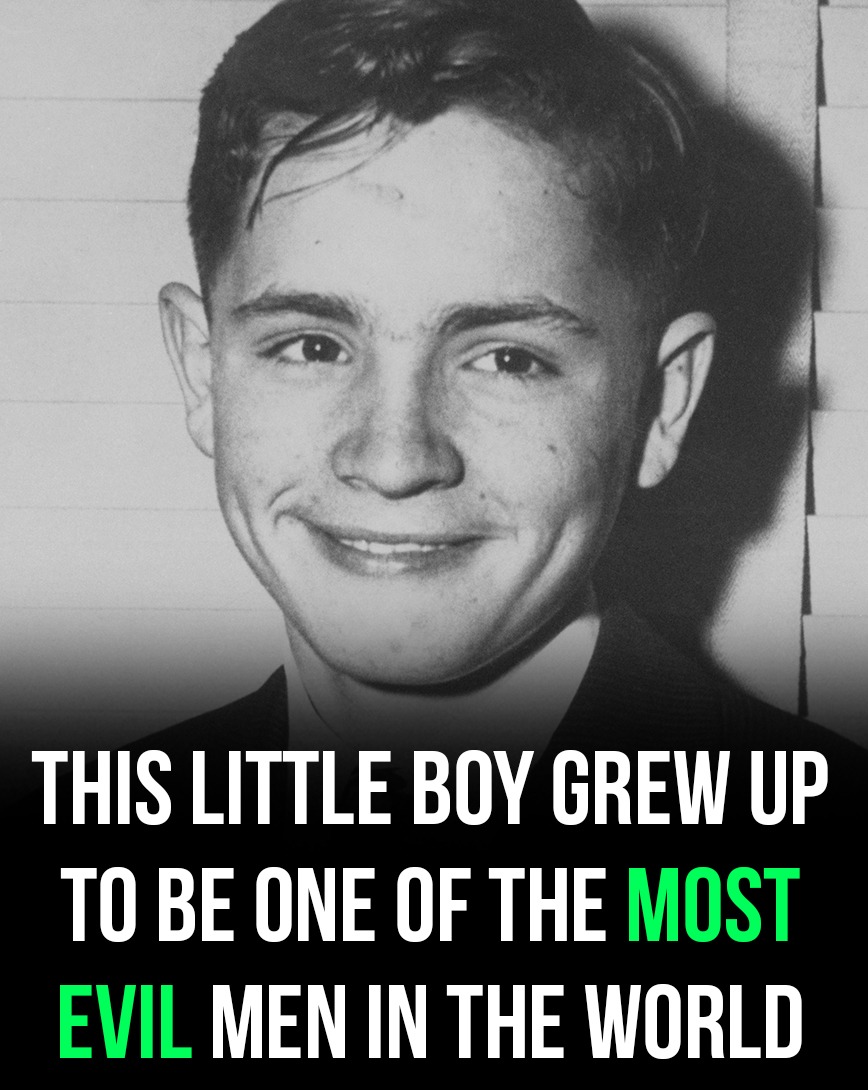
The legacy of this once ordinary boy turned tyrant is a grim one — a sobering testament to how destructive ideology, political opportunism, and unchecked power can warp an individual and devastate entire populations. Hitler’s life reminds us that evil isn’t always obvious in youth, and that underlying psychological, cultural, and societal forces can combine to empower even the most harmful leaders.
The story of Adolf Hitler is not just a chapter in history textbooks — it’s a warning. It illustrates how fragile democratic institutions can be, how economic hardship and social dislocation can fuel radicalism, and how charismatic leadership can be used to justify atrocity. Studying his rise and fall teaches us:
The importance of vigilance against hatred and bigotry.
The dangers of propaganda and misinformation.
The need to protect human rights and democratic norms.
The value of remembering history so we do not repeat it.
There is no simple explanation for how a seemingly ordinary boy became one of the most evil men in history — but there are lessons we can draw to help prevent future tragedies like the Holocaust.
History shows us not only what happened, but how it happened — and why we must be watchful, compassionate, and informed. Only through understanding the past can we hope to build a future where human dignity and dignity prevail over hatred and cruelty.
ADVERTISEMENT
