ADVERTISEMENT
The Birth of the Water Mission
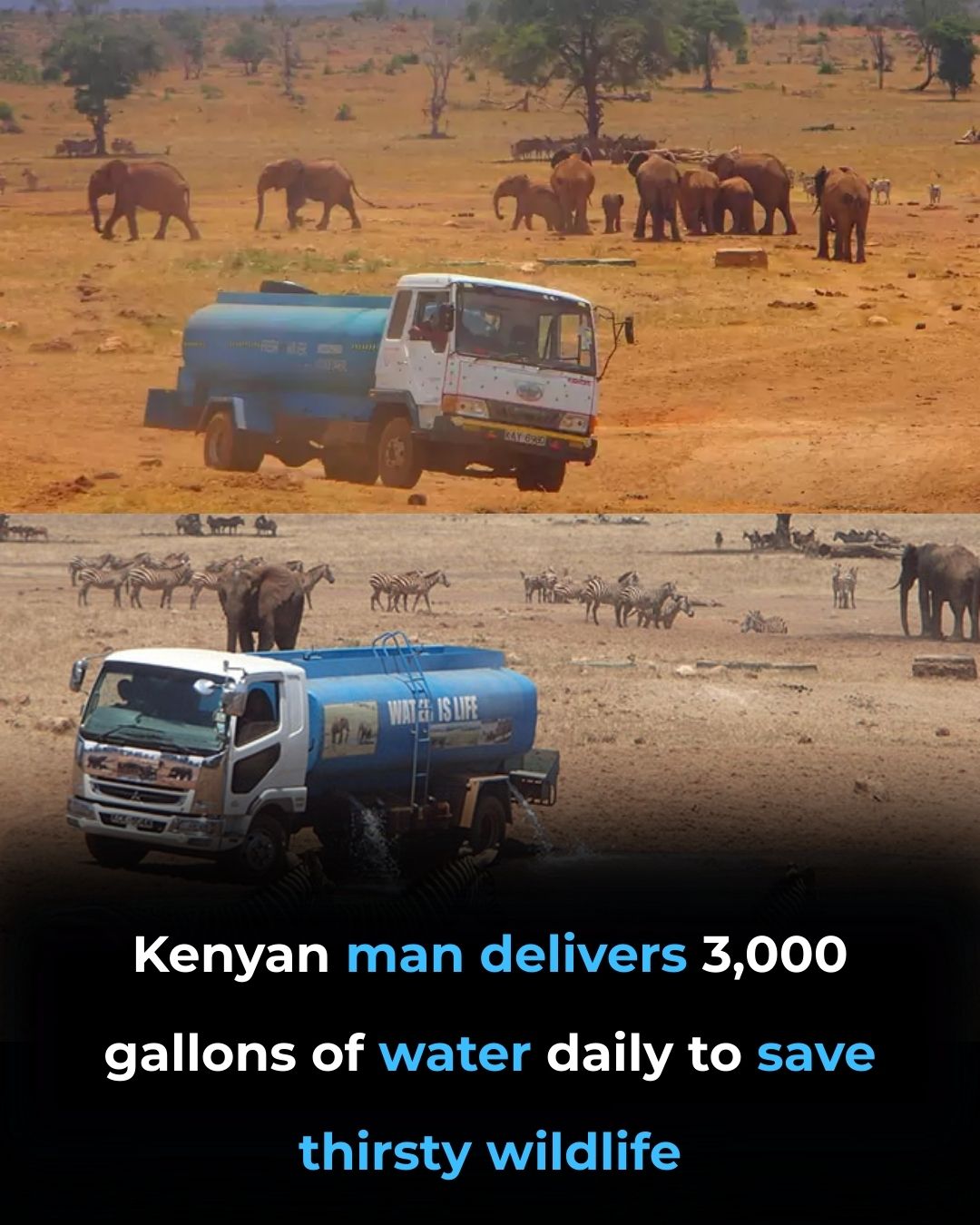
Patrick didn’t start with grand plans or institutional backing. He started with a truck. Renting a bowser capable of carrying thousands of gallons of water, he began filling it up and driving long distances every week — sometimes daily — to deliver water directly to the thirsty herds of Tsavo.
Patrick transported around 3,000 gallons of water per trip, sometimes making multiple round trips a week to ensure that animals did not suffer from dehydration.
At first, it was a personal initiative — one man using his own resources and his own time to save life. “I started giving animals water because I thought if I don’t do that, they will die,” Patrick said in earlier interviews, capturing the deeply human truth behind his mission.
From Local Action to Global Inspiration
Word of Patrick’s work spread quickly — first locally, then internationally. Photos and stories of the crowds of wildlife gathering around his bowser captured imaginations around the world. The purity of his efforts — giving water simply because life depended on it — struck a chord. People began to donate funds, support, and encouragement. A GoFundMe campaign and international support helped Patrick eventually purchase his own truck and even begin building permanent dams and solar‑powered pumps to provide water more sustainably.
He also founded organizations like Tsavo Volunteers and later the Mwalua Conservation Trust to formalize and expand his conservation work, including water delivery and anti‑poaching efforts.
His work earned him recognition — including a Head of State Commendation award from Kenya’s President Uhuru Kenyatta — and put Kajire Village on the international conservation map. Conservationists from around the world visited, learned, and even benchmarked their own water projects on his efforts.
Wildlife, Drought, and the Human Heart
The effectiveness of Patrick’s mission can be seen in the way animals responded. Elephants, known for their memory and social intelligence, came to recognize not just the truck but the man behind it. Buffaloes, zebras, giraffes and other species congregated at watering points, waiting for their daily drink — a testament to the trust and dependency that grew over time.
Patrick’s water mission, thus, became part of a larger narrative of conservation, coexistence, and climate‑adaptive action — a story that underscores how one person’s compassion can ripple outward into environmental awareness and collective action.
The Costs of Compassion
Patrick’s dedication, however, was not without strain. The rugged terrain took a toll on his vehicle, necessitating frequent and costly repairs. Maintaining regular water deliveries over miles of dirt roads required not just time and energy but long hours and personal sacrifice.
More significantly, Patrick was battling his own health challenges. After years of work, he succumbed to acute kidney failure on June 18, 2024, at the age of 51 — leaving the world mourning a compassionate conservationist whose work had become symbolic of hope for Kenya’s wildlife.
His family has since called on the Kenyan government and conservation partners to recognize his legacy and continue his work, honoring the man who gave so much to save lives — even as his own health faltered.
A Legacy of Water, Life, and Inspiration
Patrick’s story is powerful not only for what he did — daily lifesaving work in an unforgiving landscape — but for what it represents. In a world where conservation crises often seem overwhelming and solutions distant, his mission offered a simple, human answer: compassion in action.
Today, projects like borehole drilling and water infrastructure in the Tsavo Conservation Area continue to build resilience in the face of climate pressures. Partnerships between organizations such as the African Wildlife Foundation (AWF) and local conservancies aim to provide more permanent water sources for wildlife and communities, reducing conflict and enhancing coexistence — work that stands on the shoulders of pioneers like Patrick.
Lessons from the Water Man
Patrick’s life teaches us several key lessons:
1. Individual action matters.
One person’s decision to act — even without vast resources — can make life‑saving differences for countless beings.
2. Compassion transcends species.
His love for wildlife wasn’t just an idea; it was embodied through labor, risk, patience, and consistency.
3. Climate change requires both local and global responses.
While global policy matters, localized interventions — like water projects and drought resilience — keep ecosystems alive in the present.
4. Legacy lives in continued effort.
His family, community, and conservation partners carry forward a mission rooted in generosity and ecological stewardship.
Conclusion: A Life That Poured Hope Into Dry Lands
In Kenya’s Tsavo region — where parched earth meets endless horizons — one man showed that the most profound gestures of care don’t need grand stages or official titles. They only need heart, resolve, and the courage to act when it matters most.
Patrick Kilonzo Mwalua, the Water Man of Tsavo, reminded the world that water is life — not just for humans, but for all creatures with whom we share this planet. His legacy endures in the watering holes that now sustain wildlife, in the communities inspired by his story, and in the reminder that compassion can be the most powerful force for conservation.
ADVERTISEMENT
