ADVERTISEMENT
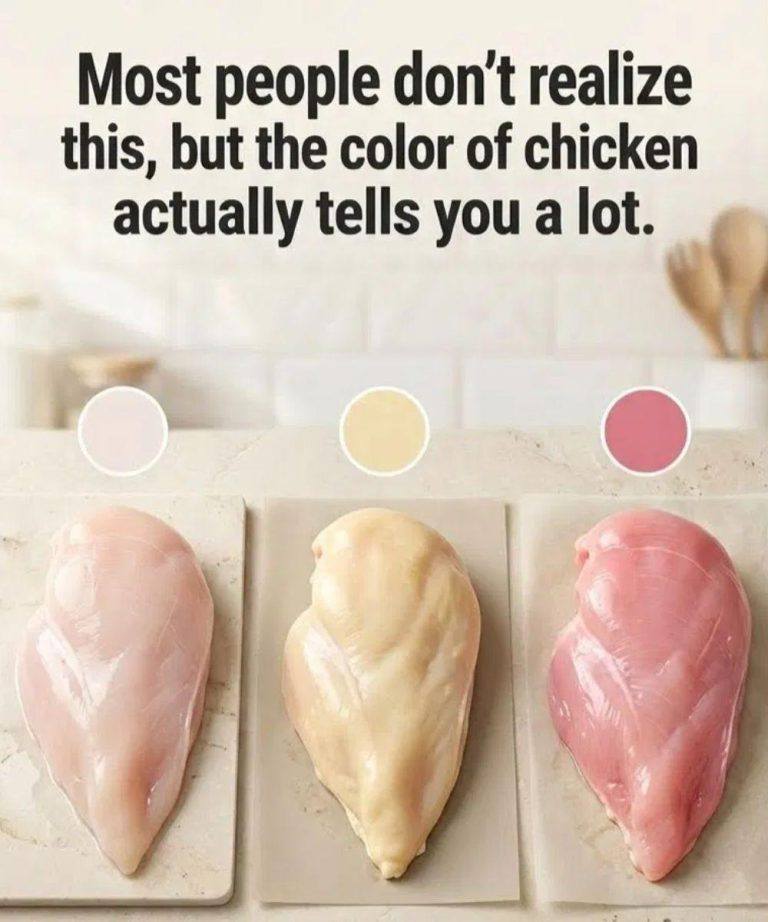
Today, however, color alone tells us very little about quality—and relying on it can be misleading.
Chicken Skin Color: What Really Determines It
Diet Matters
Chickens that consume feed rich in natural pigments called carotenoids—found in corn, alfalfa, and marigold petals—tend to develop yellow skin. Chickens fed wheat- or rice-based diets usually have paler skin.
This is why:
Yellow-skinned chicken is common in regions where corn-based feed dominates.
White-skinned chicken is more common where wheat-based feed is used.
Neither diet is inherently better or worse. The nutritional value of the meat remains largely the same.
Genetics Play a Role
Some chicken breeds are genetically predisposed to deposit pigments in their skin, while others are not. Even if two chickens eat the same diet, their skin color may differ.
Meat Color: Light vs. Dark Doesn’t Mean Good vs. Bad
Another area of confusion lies in the color of the meat itself. Chicken has both white and dark meat, and many people assume one is higher quality than the other.
The Real Difference
The color difference comes from muscle function, not age or quality.
White meat (breast and wings) comes from muscles used for short bursts of activity.
Dark meat (thighs and drumsticks) comes from muscles used more frequently, which contain more myoglobin—a protein that stores oxygen.
This leads to natural differences:
White meat is leaner and milder in taste.
Neither is inherently better. It’s a matter of preference and cooking method—not quality.
Why Color Is a Poor Indicator of Freshness
Many shoppers rely on color to judge whether chicken is fresh or spoiled, but this can be misleading.
Fresh chicken meat can range from pale pink to slightly yellowish, depending on:
Lighting
Packaging
Oxygen exposure
Processing methods
Vacuum-sealed chicken, for example, may appear darker due to reduced oxygen, then lighten once exposed to air. This is normal and not a sign of spoilage.
Better indicators of freshness include:
Smell (fresh chicken should have little to no odor)
Texture (it should be firm, not slimy)
Packaging integrity
Use-by dates
Color alone cannot reliably tell you if chicken is safe to eat.
Organic, Free-Range, and the Color Confusion
Another persistent myth is that organic or free-range chickens should look a certain way—usually more yellow or darker.
While these farming methods may influence flavor, texture, and animal welfare, they do not guarantee a specific color.
Organic chickens can be:
Yellow-skinned
White-skinned
Pale or richly colored
It all depends on feed formulation and breed choice. Some producers even adjust feed to meet consumer expectations, reinforcing the misconception that color equals quality.
This is where marketing quietly shapes perception.
How Marketing Fuels the Misunderstanding
Food marketing often leans into visual cues because they are powerful. A golden-yellow chicken on packaging subconsciously signals richness and wholesomeness. Pale chicken may be marketed as “lean” or “clean.”
Over time, these images create associations that feel factual—even when they’re not.
In some regions, producers have gone as far as:
Adjusting feed solely to alter skin color
Selecting breeds based on appearance rather than flavor or welfare
Avoiding perfectly good poultry that doesn’t meet visual expectations
This shows how deeply ingrained the color-quality myth has become.
Cultural Preferences vs. Scientific Reality
Cultural traditions play a huge role in shaping opinions about chicken color.
In parts of Asia and Latin America, yellow chicken is often preferred and associated with traditional farming.
In North America and parts of Europe, white chicken has long dominated supermarkets and fast food.
In some cuisines, darker meat is prized for stews, while white meat is favored for grilling.
These preferences are valid—but they are preferences, not evidence of quality.
Science consistently shows that:
Nutritional differences are minimal
Safety is unrelated to skin color
Flavor depends more on cooking method and freshness than color
What Actually Determines Chicken Quality
If color isn’t the answer, what is?
1. Farming Practices
Humane treatment
Clean living conditions
Responsible antibiotic use
2. Freshness
Proper refrigeration
Short time between processing and purchase
3. Handling and Storage
Cold chain integrity
Clean processing environments
4. Breed and Diet (Beyond Color)
Balanced nutrition
Natural growth rates
5. Cooking Technique
Even the highest-quality chicken can be ruined by poor cooking—and average chicken can taste amazing when prepared well.
Quality is holistic. Color is just one small, often irrelevant piece.
Why the Misunderstanding Persists
So why does this confusion still exist?
Visual bias: Humans naturally judge by appearance.
Generational habits: “This is how my family always chose chicken.”
Inconsistent education: Food literacy isn’t widely taught.
Marketing reinforcement: Packaging reinforces old beliefs.
Lack of transparency: Few consumers see how chickens are raised or processed.
When these factors combine, myths become “common knowledge.”
The Cost of Misunderstanding Chicken Color
This confusion isn’t harmless.
It can lead to:
Wasted food
Poor purchasing decisions
Unfair assumptions about farmers
Missed opportunities to support better farming practices
When consumers focus on color instead of substance, truly high-quality poultry can be overlooked simply because it doesn’t “look right.”
Rethinking What We See on Our Plates
It’s time to shift the conversation.
Instead of asking:
“Is this chicken yellow or white?”
We should ask:
How was it raised?
How fresh is it?
How was it handled?
Does it suit the dish I’m cooking?
Color can be interesting. It can be traditional. It can even be beautiful. But it should not be confused with quality.
Conclusion: Beyond the Color
It is indeed surprising that the connection between chicken color and quality is still unclear to so many—but it’s also understandable. We’ve been taught, marketed to, and conditioned to judge food visually.
The good news is that awareness is growing.
As consumers become more informed, the focus can shift from superficial traits to meaningful ones—animal welfare, sustainability, freshness, and flavor.
The next time you’re standing in front of the poultry section, remember:
Quality isn’t skin-deep.
Sometimes, the best chicken isn’t the one that looks “right”—it’s the one that was raised right, handled well, and cooked with care.
ADVERTISEMENT
